


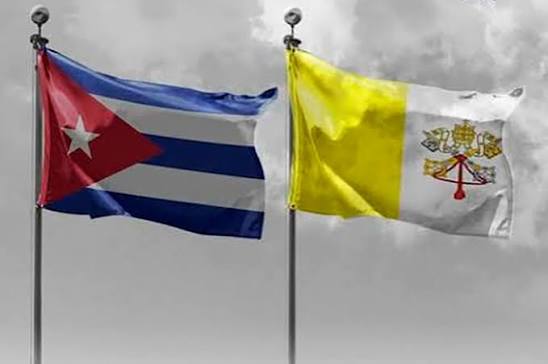
The US naval blockade of Cuba has not only brought the Caribbean island’s economy to a standstill. It has also worried international observers, because US intervention on Cuban soil raises the same international law issues as the January 2026 intervention in Venezuela.
On one side, there’s the United States, intent on taking a tough stance in situations deemed borderline and threatening national security. This is the ” Donroe Doctrine ,” the Monroe Doctrine revised by Trump, which mandates the United States’ ability to intervene wherever its interests are at stake.
On the other hand, there is a need not only to guarantee the territorial integrity of peoples, but also to help them emerge from crises. The difficult situation in Cuba has been described in numerous reports, press statements, and by many Cuban exiles. One question remains, however: who decides when and how to intervene? Can one state decide to put another state to the test, even for the most noble reasons?
Last October 22, the Cuban Embassy to the Holy See released a report on the situation on the island following the US blockade. Around the same time, Brian Burch, US Ambassador to the Holy See, hosted a select group of ambassadors for a high-level meeting with Rosa María Payá, reaffirming his commitment to the Cuban people’s quest for freedom and fundamental rights.
Rosa María Payá is the daughter of Oswaldo Payá Sardiñas, founder of the Christian Liberation Movement (MCL) and the Varela Project, Catholic-inspired peaceful opposition initiatives that have collected over 11,000 signatures calling for democratic reforms in Cuba.
In short, the US Embassy’s initiative also aimed to build bridges with the Catholic Church.
In recent days, news about the situation in Cuba has intensified. It’s worth rereading the 20-page report the Cuban Embassy submitted to the Holy See. Then it’s worth understanding why the Holy See was crucial to the rapprochement between Cuba and the United States in 2014, and how it can remain so today, in the face of a potential escalation.
The Cuba Report
The document released by the Cuban Embassy to the Holy See is Cuba’s contribution to the report requested from the United Nations Secretary-General regarding resolution A/RES/80/4, entitled “Necessity of ending the economic, commercial, and financial blockade imposed by the United States of America against Cuba.” The resolution was approved by a large majority during the UN General Assembly session on October 29, 2025.
The data refers to the blockade between March 1, 2025, and February 28, 2026. The economic damage to Cuba is estimated at $8,083,300,000. The blockade has also slowed economic growth. According to the Cuban report, Cuba’s GDP in 2025 would have been 10.8% higher than the estimated value for that year.
Such pressure that US President Donald Trump himself said on January 8, 2026: “I don’t think you can apply much more pressure, except to go in and destroy the place.”
The blockade has been in place for over 60 years, and is estimated to have cost the Cuban economy nearly $4 trillion. The Havana report is quick to point out that this is intended to “destroy the Cuban revolution,” carrying out “attacks against Cuba’s social and productive fabric,” and attempting to “isolate the country.”
The last year has seen an intensification of the blockade, with the imposition of an energy blockade against Cuba and a framework of secondary sanctions against any entity in third countries that maintains investments or commercial ties with Cuban entities.
Havana also denounces the US State Department’s “unjustifiably” listing of Cuba among alleged state sponsors of terrorism, as well as “increasingly threatening rhetoric against Cuba’s sovereignty and territorial integrity.”
All this has caused the Cuban people to suffer “a deterioration in the quality of life and incalculable humanitarian damage,” resulting in almost total fuel shortages, prolonged blackouts, interruptions to the national electrical system, and recurring supply failures.
The energy blockade against Cuba was strengthened on January 29, 2026, with a decree defining Cuba as an “unusual and extraordinary threat” to U.S. national security and foreign policy. Although the initial tariffs on imports from any country selling or supplying oil to Cuba were deemed unfounded by the Supreme Court and therefore eliminated, the report notes that “the ongoing threat of the use of force, such as the interception of oil vessels, as well as the fear created by the possible use of other coercive measures, have resulted in a near-total blockade of fuel supplies to the Caribbean nation.”
The report emphasizes that “in the first half of 2026, only one oil tanker from the Russian Federation reached Cuban shores, as a humanitarian aid shipment. Its cargo of 100,000 tons of crude oil, while a relief and a strong sign of solidarity, represented a limited fraction of Cuba’s energy needs.”
The data on energy shortages are shocking: at the end of May 2026, an estimated 2,667,000 tons of fuel were short, and this led to 1,400 MW of available power not being used precisely because of the lack of fuel.
The report notes that “due to the energy siege, Cuba’s electricity service deficit increased exponentially in 2026,” while “ according to reports from the national company Unión Eléctrica, restrictions in Cuba have prevented the execution of partial maintenance, expansion and capital for the country’s thermal units, resulting in 11 of the 15 existing units remaining outside the capital maintenance cycle.”
The Cuban government does not hesitate to define this situation as “an act of genocide also classified as collective punishment against the Cuban population and a serious violation of international law and human rights,” to the point of qualifying it as “a violation of international humanitarian law, even in the absence of a state of conventional war between the United States and Cuba,” as two statements from the Special Procedures of the Human Rights Council have emphasized.
The report emphasizes that “the UN Resident Coordinator in Cuba stated during a press conference hosted by the Secretary-General’s spokesperson on February 26 that energy shortages had become the main multiplier of humanitarian risks for the Cuban population. Likewise, the UN Secretary-General, through his spokesperson, expressed his concern about the growing fuel shortages in Cuba and their impact on the population.”
Furthermore, the report continues, “the Director General of the World Health Organization, Tedros Adhanom Ghebreyesus , expressed himself in similar terms, stating, in reference to this measure imposed on Cuba, that health must be protected at all costs and never left at the mercy of geopolitics, energy blockades and blackouts”.
But the energy damage also affects the water network. The report emphasizes that “on June 19, 2026, the company Aguas de La Habana was forced to issue an information memo indicating that, due to the impact on water supply sources resulting from the energy deficit, itself caused by the lack of fuel, it was necessary to further extend the waiting periods for water supply to customers in the capital.”
The report notes that there is a whole category of workers who cannot work, and a number of small businesses that cannot afford the luxury of importing fuel independently, while “in the healthcare sector, the damage caused by the energy siege directly threatens the lives of patients, hence its cruel and genocidal nature.”
The report further states: “In the neonatology department of a major obstetrics and gynecology hospital in Cuba, the lives of the most vulnerable newborns depend on an unreliable electricity supply,” as “the precariousness affects incubators, scales, and over 95 percent of the equipment, all of which depend on an energy supply that is never reliable.”
The report also notes that “pediatric cancer patients face similar threats. Between 300 and 400 Cuban children and adolescents are diagnosed with cancer each year. Their lives depend on medications and specialized equipment that runs on electricity.”
Overall, energy restrictions have “severely impacted hospitals’ operational capacity,” and today “the country’s surgical waiting list has reached 100,000 patients, 12,000 of whom are children,” while “it has proven very difficult to provide care to 2,888 patients dependent on hemodialysis treatments, services that require energy stability that is currently difficult to guarantee.”
The report also notes that “the number of people dying from cancer in the country has increased significantly, now exceeding 70 per day. Although Cuban survival rates remain higher than those of low- and middle-income countries, and even meet WHO targets, they have declined in recent years,” while survival rates for children and young people have fallen “from 85 percent to 65 percent.”
The report also notes that the power outage limits the mobility of commuting students and teachers, so much so that classes have often had to be converted to a completely online format.
Food production – the report highlights – “has been severely impacted by the energy blockade”, with irrigation reduced to two hours per day instead of the 16 that should be provided on average, which has led to “a reduction in agricultural harvests”, while the 20,000 tons of food stored nationwide have been distributed very slowly to vulnerable communities precisely because of the fuel shortage.
Obviously, tourism is also affected.
The Cuban government also denounces the executive order of May 1, 2026, which provides for sanctions on third countries, companies and financial institutions that have ties with Cuba, but also “restrictions in immigration matters and entry into the United States for those persons who the government of that country believes have provided material support to the Cuban state.”
The latest executive order has led to the cancellation of several shipping lines, disrupting shipping services. “UN agencies in Cuba reported that more than 2,900 metric tons of contracted food aid shipments have been affected by the disruptions to shipping services to Cuba,” while “seven critical shipments valued at $630,000 have been affected, including emergency medical kits, baby supplies, nutritional supplies for pregnant and breastfeeding women, water treatment equipment, and menstrual hygiene kits.”
Financial isolation has also led to the suspension of payments made with Visa and Mastercard on the island, a financial isolation whose consequences ” are not limited to the simple failure to execute certain transactions,” but also entail “the inability to purchase shipments of food, raw materials for the production of medicines, machinery for Cuban industry, among other repercussions, regardless of whether one has the necessary funds.”
The report notes that “between March 2025 and February 2026, 34 international banking institutions suspended or refused to conduct transactions with Cuba for fear of secondary sanctions, closing accounts or refusing transfers for the purchase of food, medicine, and fuel.”
Furthermore, “there have been cases of suspension of payments to Cuban hosts on accommodation platforms, the interruption of email services provided to Cuban companies by suppliers linked to US companies, and the closure of accounts for solidarity campaigns that collected funds for donations,” while “numerous Cuban diplomatic missions have also faced serious difficulties with banking institutions that traditionally provided them with services in various regions of the world. This situation has affected their operations and financial stability, including the processing of payments for consular services.”
Infant mortality rates are worrying. Infant mortality in Cuba rose from 4 per thousand live births in 2018 to 9.9 in 2025, a 148.75% increase. Cuba produces 395 drugs, but 300 are in short supply due to difficult access to raw materials and pharmaceutical supplies, while “there is persistent difficulty in acquiring medical technology of US origin or containing more than 10% of components from that country, which requires the use of intermediaries and a substantial increase in prices, which could prove unsustainable for the Cuban economy.”
In oncology, there remain difficulties in purchasing a number of innovative cancer drugs produced by US pharmaceutical companies. Access to specialty care is also difficult, including producing Braille aids for the visually impaired or cochlear implants for the deaf.
But the report also looks further, noting the collapse in cement production, a blockage in the implementation of the national road program, and a shortage of buses for passenger transport.
The report is detailed, including statements of support from friendly countries, specific situations regarding damaged industries and businesses, and denounces the United States’ war rhetoric toward Cuba. What will be Cuba’s fate remains to be seen.
The current situation
A November 17 article by Oilprice , the website that monitors global oil prices, described the energy blockade situation in Cuba as “a bonanza for U.S. fuel exporters.”
According to the article, US traders sent more than $230 million worth of fuel to Cuba in August 2026, despite the fuel blockade, benefiting from an exemption that allowed private sector supplies, with reported profit margins of around 20%. For its part, Cuba is increasingly importing solar equipment from the United States to address electricity shortages.
Oilprice notes, however, that the $230 million figure is modest. By way of comparison, Oilprice points out that between May and August 2025, Pemex in Mexico alone exported over $3 billion worth of crude oil and fuel to Cuba.
However, oil is essential for Cuba. According to the International Atomic Energy Agency, 84% of Cuba’s energy comes from oil. The situation in Cuba allows US companies, Oilprice notes, to “expand into areas previously reserved for government entities,” such as “food distribution or the supply of essential goods.”
The position of the United Nations
On October 28, 2026, the United Nations General Assembly adopted a non-binding resolution calling, for the 34th consecutive year, for an end to the U.S. economic embargo against Cuba. The resolution was passed with 130 votes in favor, 17 against, and 25 abstentions. However, the vote also marked the lowest point on the issue. In 2025, there were 165 votes in favor, with only 12 abstentions.
Resolutions at the United Nations General Assembly are not legally binding, but they somehow reflect global positions. Cuba’s position, also highlighted in the report, was outlined by Cuban Foreign Minister Bruno Rodriguez, who last year at the United Nations denounced the American Empire as “enabling genocide,” describing the energy shortages, food, medicine, and fuel shortages, combined with increasingly profound financial woes, as a humanitarian attack.
But what will be the position of the Holy See?
The Holy See in Cuba
In 2025, the Holy See mediated with Cuba, leading to the release of 553 political prisoners. This was a further sign of a diplomatic history in which the Holy See has always been close to Cuba.
The Holy See opened the nunciature in Cuba in 1953. But it was with the Cuban missile crisis of 1962, and the appeal of John XXIII, that the Church’s solicitude for la isla became evident.
The statue of the Virgen del Cobre is proudly displayed in the Vatican. Cardinal Tarcisio Bertone inaugurated it in September 2014. Bertone returned to Cuba in 2014, precisely when the Secretariat of State, led by Cardinal Parolin, sent letters expressing the Holy See’s willingness to mediate between the United States and Cuba in negotiations to reestablish diplomatic ties. These two letters were only the latest in a relentless effort by the Holy See for Cuba over the past thirty years. A collective effort, with Cardinal Roger Etchegaray as its prophet.
Cuba’s slow opening to the world
In his Roman home, Cardinal Etchegaray proudly displayed a nativity scene that Fidel Castro had given him on one of his many trips to Cuba. When he first visited in 1989, Cardinal Etchegaray was president of the Pontifical Council for Justice and Peace. It was a secret trip, but it bore great fruit. Cuba, yes, began to open up to the world. But the world was not yet open to Cuba.
After the revolución, church property had been confiscated, and no compensation had been given to the Church, while hundreds of foreign clergy had been expelled from Cuba.
State atheism was Cuba’s official policy until 1992, when the Cuban Constitution upheld religious freedom, although ultimately it is more about freedom of worship than religious freedom.
It took John Paul II’s visit to overcome the suspicion of those who attended Mass and to consider Christmas a national holiday. Good Friday then became a national holiday during Benedict XVI’s 2012 visit. Meanwhile, some religious groups had obtained permission to import religious materials and meet with their religious leaders. This was certainly a sign of the Catholic Church’s diplomatic impact, which extends beyond the Christian religion. John Paul II’s visit to Cuba, for example, led to Jews being granted permission to celebrate their rites publicly and to import religious materials and kosher food for Passover.
From Etchegaray’s travels to that of John Paul II
Let’s go back to that Christmas of 1989: the Berlin Wall had just fallen, and Cardinal Roger Etchegaray had a mission to go to Cuba to build bridges. The New Year’s Mass in Cuba was a spectacle. Before the crowd, Cardinal Etchegaray asked during his homily: “What message should I bring to the Pope?” And the crowd replied: “Let him come!” And the Cardinal replied: “I heard your message. I don’t know what he will say, but he will certainly come.”
During his nine-day stay in Cuba, Cardinal Etchegaray also met with Fidel Castro and called for an easing of tensions between Church and State, after 30 years of oppression. Fidel Castro, for his part, made no secret of his desire to welcome the Pope, partly because a visit would restore his declining international image and partly because he thought it would be beneficial to speak face-to-face with John Paul II about many of the problems of the secular world, such as disarmament, Third World debt, and poverty.
But John Paul II decided to proceed cautiously and awaited positive developments on religious freedom from the Cuban government before making any commitment. Castro, for his part, began the process of rapprochement, with “small but significant steps,” according to the analysis of Enrique Lopez Oliva, a professor of religion and history at the University of Havana who was allowed to publish Religion en Cuba, a biweekly newsletter, the country’s only independent publication.
This tolerance was also justified by the fact that the publication had a very limited circulation (about 30 copies) and that the 12 subscribers were all foreign journalists and embassies.
Castro also took more important steps. In 1996, the Cuban government allowed 30 foreign priests to join the 210 Cuban priests already present in the field. The 30 nuns who arrived, for their tireless work in hospitals and among refugees, were called by Fidel Castro a “model for the communists.”
All steps that further loosen Vatican diplomacy.
On July 12, 1994, Fidel Castro met for two hours at the apostolic nunciature in Cuba with Cardinal Bernardin Gantin, then president of the Congregation for Bishops and the Pontifical Commission for Central America.
Back in Rome, Gantin spoke with John Paul II about the improvement in the religious atmosphere and explained that Castro would have appreciated a papal visit. “The changes toward the Church are part of a broader change in Cuba… both social and economic. In general, the nation needs great changes, and these have occurred, albeit on a small scale,” Cardinal Gantin explained to the Pope.
Jaime Lucas Ortega y Alamino, Archbishop of Havana, also participated in the meeting: in October 1994, John Paul II made him the first Cuban cardinal created since the Cuban revolution. and the second Cuban cardinal of all time. And Castro will take the appointment as a gesture of reconciliation, allowing 2,500 Cuban faithful to fly to Rome to attend the council where Ortega is created cardinal—a celebration at which Castro himself will be represented by a high-ranking government official.
In 1996, just days before the then Secretary for Relations with States’ trip to Cuba, the Vatican launched its first public attack on the main US law aimed at isolating Cuba. This was the Helms-Burton Act, signed by President Clinton in March of that year after the Cuban government shot down two US civilian airliners piloted by Cuban-Americans. The law allowed Americans to sue foreign brands that used property seized after the 1959 Cuban revolution, and barred directors of suspicious companies from entering the US.
A law with some “legally questionable” parts, notes Cardinal Etchegaray, who then underlines that the Catholic bishops of Cuba had already spoken out against the law, and that the Helms-Burton Act had drawn criticism not only from Latin American countries, but also from “the United States’ Western allies.”
John Paul II pursued active yet secretive diplomacy, following methods the Holy See had already experimented with under the so-called Ostpolitik. The Pope called for reconciliation among all Cubans living in Cuba and abroad, initiated a dialogue with Castro, and advocated establishing political and diplomatic dialogue between Cuba and the United States to foster, when the time came, a peaceful transition on the island. His first request was an end to the US embargo against Cuba.
The work of the U.S. Conference of Catholic Bishops
The Holy See’s approach is supported by the commitment of the episcopal conferences, starting with the United States, which has always been in constant contact with the Cuban bishops. In 1972, the US Conference of Catholic Bishops supported the Cuban bishops’ 1969 request to end the US embargo against Cuba. In 1985, the Cuban and American bishops’ conferences exchanged visits. And one of the leading advocates of a new diplomatic relationship between Cuba and the United States—and among the most vocal critics of the embargo—was Cardinal Bernard Law, then Archbishop of Boston, who visited Cuba in 1985 and 1989, meeting with Fidel Castro on both occasions.
It had therefore been a long journey that had led to the extraordinary impact of Etchegaray’s first visit to Cuba. From his discussions with the leader maximo , Etchegaray had developed the conviction that the Catholic Church could also play an important political role in Cuba, provided that its credibility was never called into question.
The Church, a bridge of reconciliation
And it wasn’t, thanks to the relentless work of Vatican diplomacy. At John Paul II’s suggestion, the Church took the lead in the Cuban reconciliation movement. On September 8, 1993, “El amor todo lo espera ” (Love Waits for All) was published, a message from the 11 Cuban bishops, who aligned themselves precisely with the pontiff. “Cuba’s problems must be resolved with the cooperation of all Cubans,” they wrote, essentially proposing to Castro and his opponents the opening of diplomatic and political dialogue for national reconciliation to be pursued peacefully.
This message was at the heart of Etchegaray’s meeting with Fidel Castro in 1993. Both the leader and the Cardinal supported the reconciliation movement and called for an end to the embargo. In that moment, the Church became a credible partner in Fidel Castro’s eyes. In 1996, he met with John Paul II in the Vatican.
John Paul II visited Cuba in 1998 in this climate. He was the first Pope to set foot on Cuban soil. He didn’t arrive there by chance. The diplomatic effort was immense. Not surprisingly, the trip was a success. “Cuba must open itself to the world, and the world must stand with Cuba,” the Pope said in Havana. In a series of speeches, the Pope highlighted the themes of family, youth, homeland, and, finally, the Church’s mission. He criticized socialist society, but also free-market capitalism.
The latest developments
In 2008, against a backdrop of a completely changed political landscape, Cardinal Tarcisio Bertone, Secretary of State, traveled to Cuba to celebrate the tenth anniversary of John Paul II’s visit, retracing his itinerary. Fidel was no longer leading the country, but his brother Raul. Bertone was the first foreign diplomat to meet him on an official visit. “It seemed like doors could be opened, because Raul was well aware of the people’s difficulties, their shortcomings, and their aspirations,” he stated.
This brings us to Benedict XVI’s 2012 trip. Fidel Castro goes for coffee with the Pope, discusses the absence of God, and asks for and receives books on the subject. Raul is ever-present; it almost seems as if the credibility of a regime nearing its end depends on the Catholic Church.
The Church’s support is crucial for Raul Castro. But it’s also crucial for US President Barack Obama. Both want to lift the embargo, but they need a supportive press. And, in the game of diplomacy, they see the highly popular Pope Francis as a good sponsor.
When he announced the resumption of diplomatic relations with Cuba, Obama cited Pope Francis twice. Raúl Castro does the same, to show his support for a predominantly Catholic population. The Holy See’s diplomacy, which has always worked toward this goal, accepts and, indeed, encourages the game. Pope Francis’s two letters demonstrate a particular sensitivity to the issue.
The Holy See and Cuba
It’s unlikely the Holy See will be able to mediate again. In 2014, both sides were willing, and the Holy See was the only country in the world, along with Canada, to maintain diplomatic representation in Cuba and the United States throughout the crisis.
And yet, the Holy See has taken important steps. On February 25, 2026, Bruno Rodríguez Parrilla, Cuban Foreign Minister, visited the Vatican to discuss the situation in Cuba with the Holy See. At the time, the US envoy to the Vatican, Mike Hammer, was also in Rome. In that situation, the Holy See was described as active in mediation.
For its part, the Holy See had repeatedly expressed concern. Leo XIV, concluding the Angelus on February 1, 2026, expressed concern “for the suffering of the beloved Cuban people.” The Pope’s words came the day after the publication, on January 31, 2026, of a letter from the Cuban bishops to all men of good will, expressing “deep concern for the deterioration of the social and economic situation” in the country, highlighting “the risk of a subsequent social collapse.”
During those days, Hammer had met in the Vatican with Archbishop Paul Richard Gallagher, Vatican Secretary for Relations with States, accompanied by the US Ambassador to the Holy See, Brian Burch. On that occasion, the “important role” of the Catholic Church on the island was emphasized. Also in Rome at the time was Silvano Pedroso Montalvo, Bishop of Guantanamo- Baracoa , and Hammer had met with him and a group of Cuban exiles in Italy, whom he urged to support a “peaceful and swift” transition.
On May 7, 2026, U.S. Secretary of State Marco Rubio had an audience with Pope Leo XIV .
Although not mentioned in the readout from the U.S. Embassy to the Holy See following the meeting, the situation in Cuba was part of the discussions, so much so that Rubio had spoken about it extensively in the press conference preceding his trip to Italy and the Vatican.
Rubio had described the situation in Cuba as “unacceptable,” adding that the United States would like to provide more aid to the Cuban people through the Church. However, the fact remains that since January 29, Cuba has been declared a threat by the United States, accused of harboring transnational criminals and being a hub for drug trafficking in the Caribbean. In this sense, the US operation in Venezuela was also justified by an accusation of international drug trafficking against Venezuelan President Maduro.
Today, faced with a possible escalation, Leo XIV’s appeal can only be to act with good will, avoid conflict, and, above all, avoid humanitarian escalation.
Whether he is listened to is a matter of debate. It has been argued that the Pope should be listened to when he speaks as Pope, but when he speaks as Head of State, he is a head of state like any other, with a legitimate but questionable opinion.
And so, faced with the denial of the Church’s moral authority, one wonders how the Holy See might react if, ultimately, Trump were to follow through on his anti-Cuban initiatives by ordering an attack on the island. The Pope will undoubtedly complain about the violation of international law. But will that be enough?